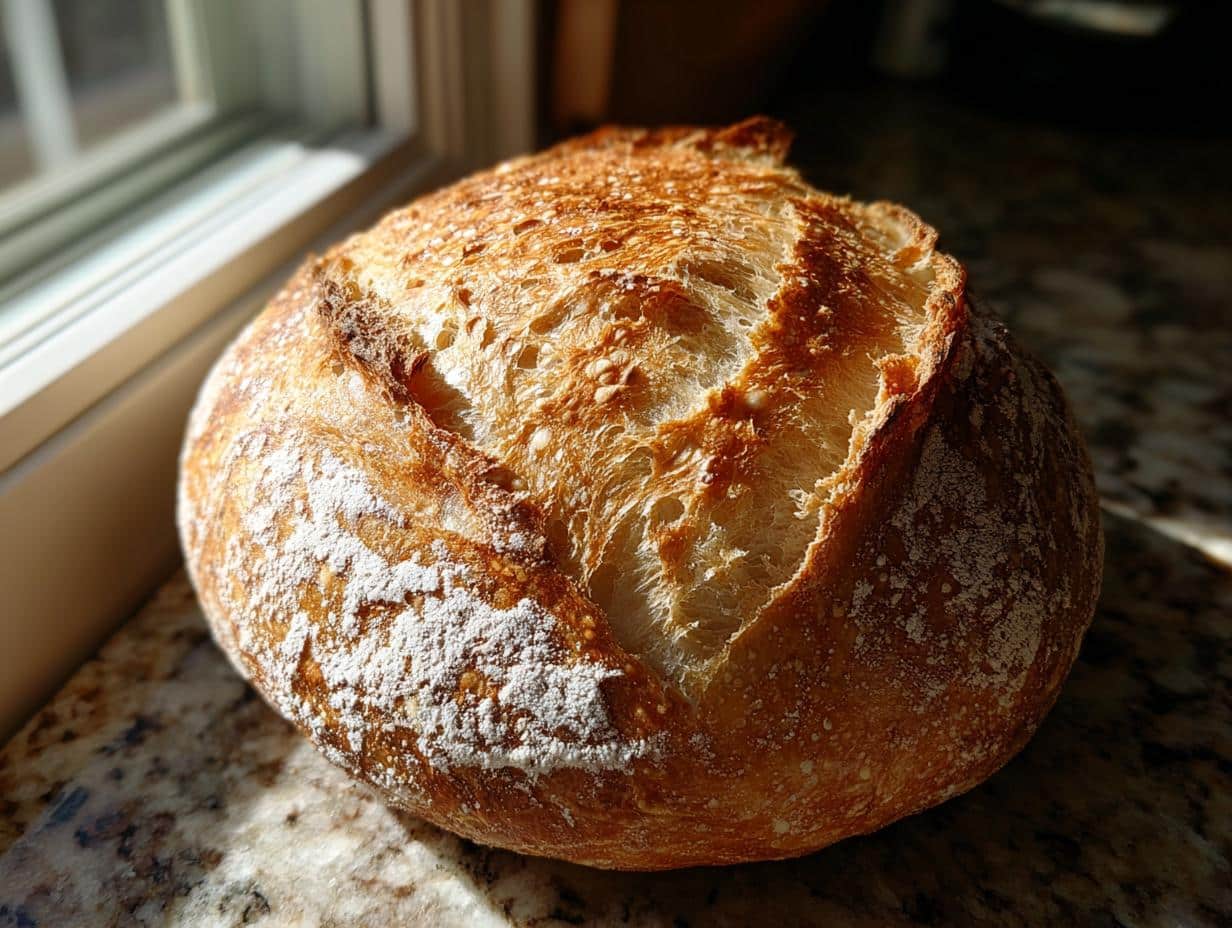
Okay, let’s talk sourdough! Seriously, is there anything more magical than turning flour and water into bubbly, tangy goodness? I think not! And guess what? You can totally do it yourself. That’s right, making your own sourdough starter is WAY easier than you think. This recipe? It’s my go-to. Super simple, beginner-friendly, and it *actually works*. Trust me, I would know! I’m Casey Mitchell, and I’m a home cook from Texas who loves to share simple, flavorful recipes. I’ve been baking since I was a little girl, and nothing beats the smell of a fresh-baked sourdough. So ditch the store-bought stuff and let’s get this sourdough starter going!

Why You’ll Love This Sourdough Starter Recipe
Seriously, why *wouldn’t* you want to make your own starter? This recipe is trending like crazy, and for good reason!
- It’s unbelievably easy – even if you’ve never baked a thing in your life!
- You’ll save money. Store-bought sourdough? $$$! Flour and water? Pennies!
- The satisfaction is HUGE. Watching that little starter bubble and grow? It’s like having a pet, but one you can eat!
Ingredients for Your Sourdough Starter
Alright, let’s keep this simple! You only need two things to start your sourdough journey. Ready? Here we go!
- 1 cup unbleached all-purpose flour. Seriously, unbleached is the way to go!
- 1/2 cup unchlorinated water. Yep, gotta make sure that water is chlorine-free.
That’s it! Told ya it was easy! Now, let’s get started!

Step-by-Step Instructions for Making a Sourdough Starter
Alright, here’s the lowdown on how to get your sourdough starter going, step-by-step. Don’t worry, it’s not rocket science, and I’m here to walk you through it!
- Day 1: Mix it up! Grab a clean, wide-mouth jar (a quart size works great!). Mix together 1 cup of that unbleached all-purpose flour and 1/2 cup of unchlorinated water. Stir it until it’s just combined – it’ll be kinda shaggy, and that’s okay!
- Rest and Relax: Cover the jar loosely. I usually just pop the lid on top without screwing it tight, or use a piece of cheesecloth secured with a rubber band. Let it sit at room temperature (ideally around 70-75°F) for 24 hours. Don’t peek… okay, peek just a little!
- Day 2: The Discard! This is important! After 24 hours, you’re gonna discard HALF of the mixture. I know, it feels wasteful, but trust me! This is necessary to build the right kind of bacteria.
- Feed Me, Seymour! Now, add in 1/2 cup of flour and 1/4 cup of water to the remaining starter in the jar. Mix it REALLY well. Get all that flour incorporated.
- Repeat, Repeat, Repeat: Repeat step 3 and 4 EVERY DAY for the next 7-10 days. Yep, that’s the commitment! You’re looking for your sourdough starter to double in size within 4-8 hours after feeding. That means it’s ALIVE!
- Is It Ready Yet?: How do you know when it’s ready? Well, it should be bubbly, smell slightly tangy (a little like yogurt), and reliably double in size after you feed it. If it’s not doubling, keep going! Sometimes it takes a little longer.
- Time to Bake or Store: Woohoo! Once your starter is active and predictable, you can finally bake with it, or store it in the fridge (more on that later!).
See? Not so scary, right? Just a little patience and a whole lotta love (and flour and water!).

Tips for a Successful Sourdough Starter
Want to make sure your sourdough starter is a rockstar? Here are a few extra pointers that’ll practically guarantee success!
- Temperature is key! Keep your starter in a warm spot (70-75°F is ideal). Too cold, and things will slow down. Too hot… well, you might end up with some unwanted funkiness.
- Don’t panic if you see a layer of dark liquid on top. That’s “hooch,” and it just means your starter is hungry! Just pour it off before you feed it.
- Be patient! It can take a week or two for your starter to really get going. Don’t give up! The end result: AMAZING!
- Use a kitchen scale if you can! It’s SO much more accurate than measuring cups.
Troubleshooting Common Sourdough Starter Issues
Okay, so things aren’t always perfect, right? Don’t freak out if your sourdough starter throws you a curveball. Here’s how to handle a few common issues:
- Slow Activity: Is your starter not doubling like it should? Make sure it’s warm enough! Also, try using a different flour. Sometimes, certain flours just don’t play nice.
- Mystery Mold: Seeing fuzzy mold? Sadly, that starter’s gotta go. Toss it and start fresh with a new jar. Seriously, don’t risk it!
- Funky Smells: A little tangy is good, but a NASTY smell? That can be a sign of bad bacteria. Try increasing the discard amount when you feed your starter. That will keep those bad odors away.

FAQ About Sourdough Starter
Got burning questions about your sourdough starter? Don’t worry, I got you! Here are a few of the most common questions I get asked all the time:
What if my starter isn’t doubling?
Patience, grasshopper! Sometimes it just takes a little longer. Make sure your starter is warm enough (around 70-75°F). Also, are you using unbleached flour? Bleached flour can sometimes inhibit growth. If you’ve been consistent and it’s still not doubling after two weeks, try switching to a different brand of flour – it might just be finicky!
Can I use different flour?
Yep, absolutely! While I usually stick to unbleached all-purpose for my easy sourdough starter, you can experiment! Whole wheat flour will give your starter a slightly different flavor and can sometimes boost activity. Rye flour is another fun one to try. Just remember, each flour will behave a little differently, so you might need to adjust the amount of water you use.
How often should I feed it?
When you’re first starting out, feeding it every 24 hours is key. Once your starter is active and doubling reliably, you can switch to feeding it every 12 hours if you want to bake more frequently. If you’re not baking every day (join the club lol), you can store the starter in the fridge and only feed it once a week (or even less!). Just be sure to revive it with a few feedings before you bake.
Storing Your Active Sourdough Starter
Okay, so you’ve got this bubbly, beautiful sourdough starter, but you’re not baking every single day? I get it! Life happens! Don’t worry, you can totally stash it in the fridge. Just give it a good feeding first, then pop the lid on and stick it in there. When you’re ready to bake again (yay!), take it out, give it a couple of feedings every 12 hours or so, and it’ll perk right back up! Super easy, I promise!
Nutritional Information Disclaimer
Okay, so just a heads-up: the nutritional info I provide? It’s an estimate! It can totally vary depending on the brands you use and, well, let’s be honest, how heavy-handed you are with the flour! So, don’t take it as gospel, okay?
Ready to Bake? Rate This Sourdough Starter Recipe!
So, you’ve made your sourdough starter! Awesome! Now, head on over to my recipe page, give it a rating, and let me know how it turned out! Share your pics on social media too, tag me, and let’s see those beautiful loaves! Happy baking!
Print
Sourdough Starter
- Prep Time: 5 min
- Cook Time: 0 min
- Total Time: 7-10 days
- Yield: 1 starter 1x
- Category: Baking
- Method: Fermentation
- Cuisine: American
- Diet: Vegetarian
Description
Make your own sourdough starter with this simple recipe. It’s easy to follow and perfect for beginners.
Ingredients
- 1 cup unbleached all-purpose flour
- 1/2 cup unchlorinated water
Instructions
- In a clean jar, mix flour and water until combined.
- Cover loosely and let sit at room temperature for 24 hours.
- After 24 hours, discard half of the mixture and add 1/2 cup flour and 1/4 cup water. Mix well.
- Repeat step 3 daily for 7-10 days, or until the starter doubles in size within 4-8 hours after feeding.
- Once the starter is active, feed it regularly to maintain its strength.
Notes
- Use a kitchen scale for accurate measurements.
- Store your starter in a cool place.
- If you see a layer of dark liquid (hooch) on top, it means your starter is hungry; just pour it off before feeding.
Nutrition
- Serving Size: 1 tablespoon
- Calories: 35
- Sugar: 0g
- Sodium: 1mg
- Fat: 0g
- Saturated Fat: 0g
- Unsaturated Fat: 0g
- Trans Fat: 0g
- Carbohydrates: 7g
- Fiber: 0g
- Protein: 1g
- Cholesterol: 0mg